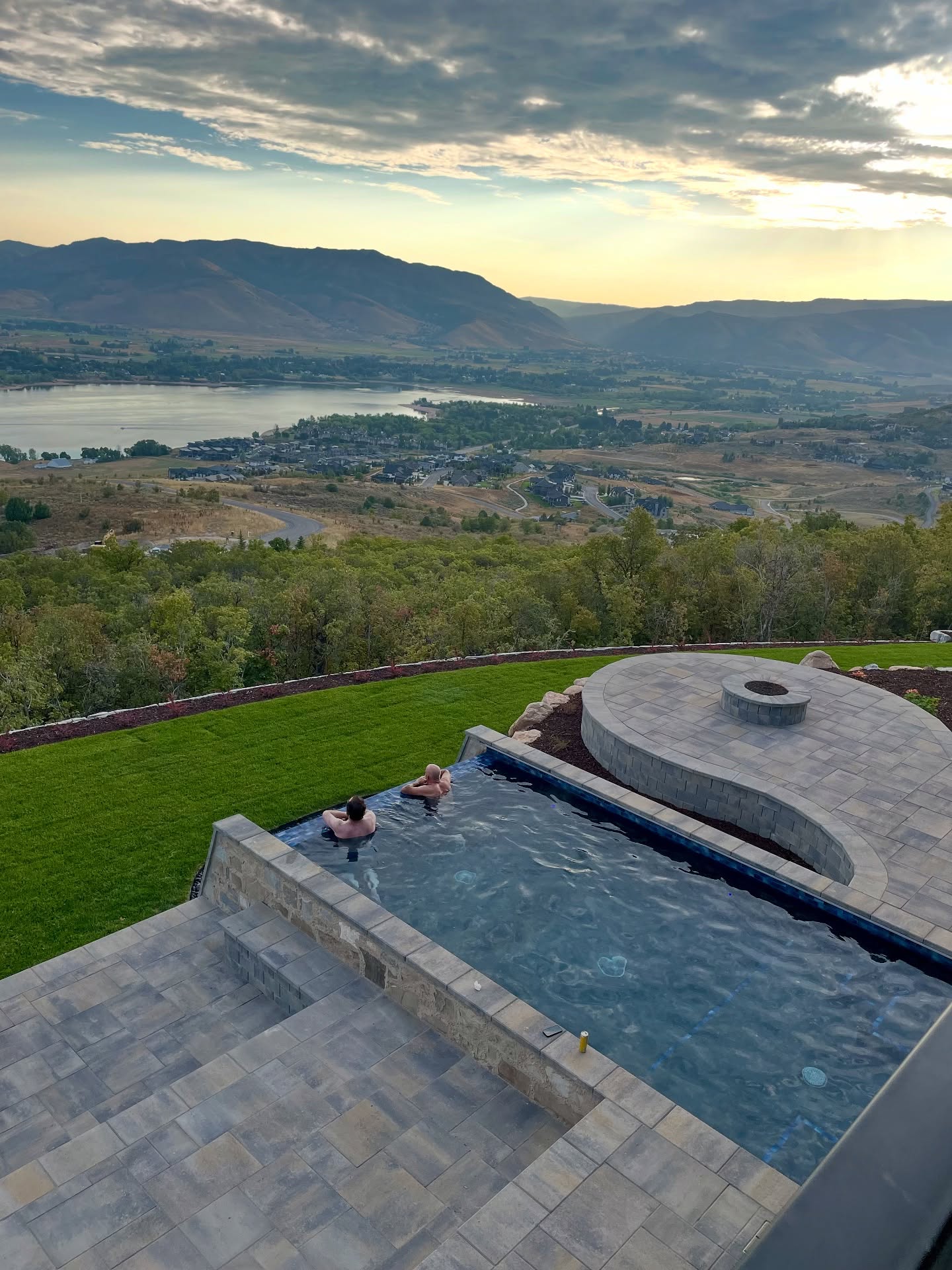
Owning a pool in Utah is different from owning one in Arizona or Florida. Our four-season climate, specific soil conditions, and local regulations create considerations that out-of-state pool advice often misses.
Here's what Northern Utah pool owners actually need to know.
Utah's Climate Reality
We have genuine seasons here. That's part of what makes Utah great, but it also shapes how you'll own and maintain a pool.
Summer (June-August): Prime swimming season. Utah's low humidity makes even hot days comfortable poolside. Water temperatures naturally climb into the 80s with proper sun exposure.
Shoulder Seasons (May, September): Swimmable with heating. Many Utah pool owners extend their season significantly with pool heaters or heat pumps. Morning water might be cool, but afternoon swimming is entirely possible.
Winter (November-March): Pool closed. Proper winterization is essential, not optional like in warmer climates. Freeze damage to equipment and plumbing is the primary risk.
Winterization Is Non-Negotiable
In warmer states, pools run year-round. In Utah, closing your pool properly for winter is essential.
What winterization involves:
- Lowering water level below skimmers and returns
- Draining and blowing out all plumbing lines
- Adding winterizing chemicals
- Covering the pool
- Protecting equipment from freezing
You can learn to do this yourself, or hire a service. Either way, it must be done correctly. Freeze damage from improper winterization is expensive to repair and completely preventable.
Spring opening is the reverse process, removing the cover, refilling, restarting equipment, and balancing chemicals.
Our Soil Conditions
Northern Utah has varied soil, from sandy areas near the Great Salt Lake to clay-heavy ground along the Wasatch Front. Soil type affects:
- Excavation complexity
- Drainage requirements
- Foundation preparation
- Long-term pool stability
A builder experienced in Utah understands these variations and plans accordingly. What works in one neighborhood might need adjustment in another.
Water and Utilities
Water: Filling a typical pool uses 15,000-25,000 gallons. You'll top off periodically due to evaporation (Utah's dry climate means more evaporation than humid regions). Most homeowners don't notice significant water bill impacts after the initial fill.
Electricity: Pool pumps run daily during swim season. Modern variable-speed pumps are significantly more efficient than older single-speed models. If you're building new, efficient equipment is standard. If you're inheriting an older pool, pump upgrades often pay for themselves in energy savings.
Gas/Propane: If you have a pool heater, expect increased gas usage when heating. Heat pumps are an electric alternative that work well in Utah's climate for extending the season.
Local Regulations
Pool installation requires permits in all Northern Utah municipalities. Requirements typically include:
- Fencing and barrier requirements (usually 4-foot minimum with self-closing gates)
- Setbacks from property lines
- Electrical inspection for equipment
- Final inspection before filling
We handle permit applications as part of our standard process. Timelines vary, Weber County typically processes permits in 2-4 weeks, other areas may differ.
Maintenance Reality
Utah's dry climate and intense sun affect pool chemistry. You'll typically need to:
- Test and adjust chemicals more frequently than in humid climates
- Add water more often due to evaporation
- Clean more frequently during cottonwood season (that fluff gets everywhere)
- Be prepared for occasional dust storms depositing debris
None of this is overwhelming, but it's worth understanding before you buy. Most homeowners spend 30-60 minutes per week on basic maintenance during swim season.
The Lifestyle Payoff
Utah summers are perfect for pool ownership. Long sunny days, comfortable evenings, and a genuine outdoor culture make pools well-used here, not just status symbols sitting idle.
From Memorial Day through Labor Day (and beyond with heating), a pool becomes the center of family time, entertaining, and daily relaxation. The maintenance and seasonal considerations are real, but so is the reward.
Questions?
If you're considering a pool and want to understand what ownership actually looks like in Northern Utah, we're happy to talk through the realities. No pressure, just honest information.
Contact us or call (801) 510-7142.